

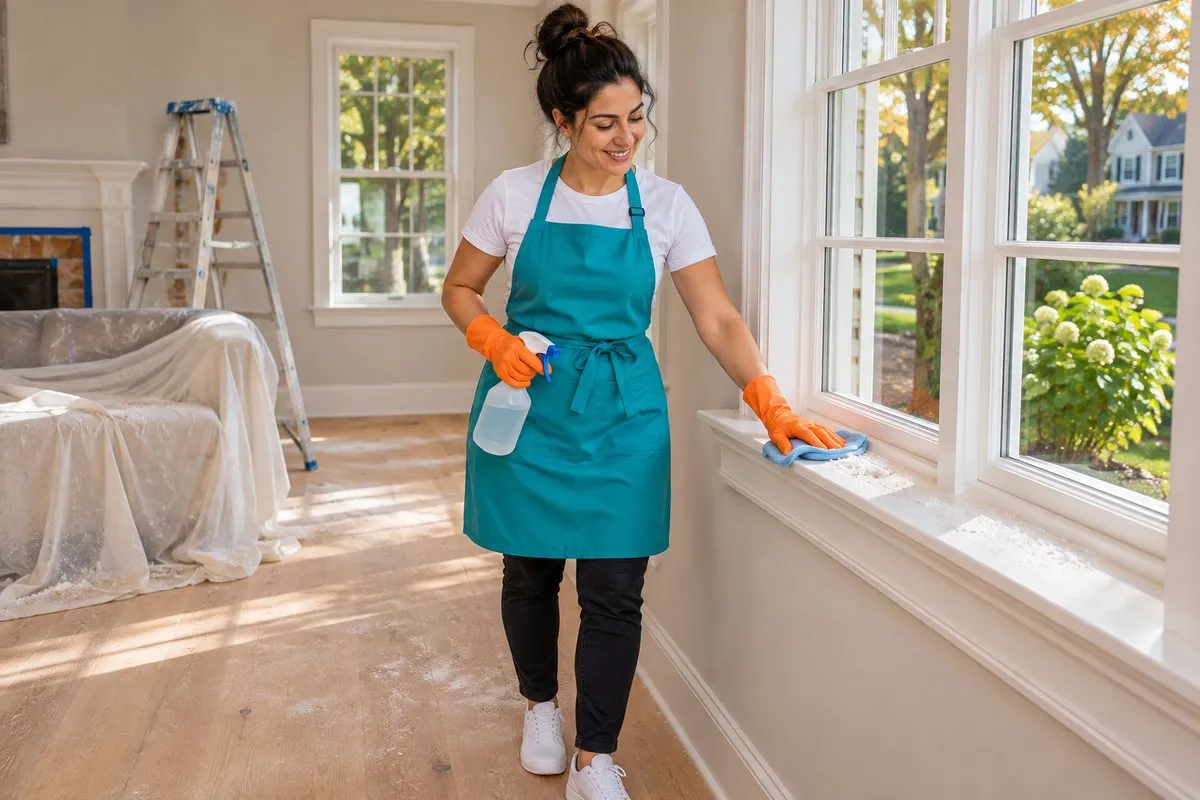
How to Get Rid of Construction Dust After a Renovation
To get rid of construction dust after a renovation, work from the top of each room down with damp microfiber cloths, vacuum with a fine (HEPA) filter before you mop, and change your HVAC filter when you're done. Never dry dust or dry sweep: it throws the fine dust back into the air and it settles again.
Expect more than one pass. Fine dust keeps drifting out of vents, fixtures and high ledges for days after the work ends.
Why is construction dust so hard to get rid of?
Drywall, plaster and sawdust are much finer than everyday house dust. They float, they spread through the whole house on the air, and they settle into every groove: trim, window tracks, the inside of cabinets, light fixtures and the HVAC system. A regular dusting cloth just pushes them around.
What do you need to clean construction dust?
- A vacuum with a HEPA filter and a brush attachment. A shop vac with a fine filter works for the heavy stuff.
- A stack of microfiber cloths, more than you think.
- Two buckets: one with warm water and a little dish soap, one with clean rinse water.
- A flat microfiber mop.
- A step stool for high ledges and fixtures.
- A dust mask. Fine dust isn't something you want to breathe.
- New HVAC filters.
How do you clean construction dust, step by step?
- Wait for the work to finish. Clean after the last trade leaves, including the punch list. Otherwise you'll do it twice.
- Turn the HVAC off while you clean, so it isn't pulling dust around.
- Open windows if the weather allows, and set a box fan in one window blowing out.
- Vacuum high first. Use the brush attachment on crown molding, the tops of door frames, ledges, light fixtures and vent covers.
- Wipe high to low with damp cloths. Ceiling fans, fixtures, upper cabinets, then counters, then lower cabinets and baseboards. Fold the cloth to a clean side often and rinse it in the clean bucket.
- Go inside everything. Cabinets, drawers, closets and the medicine cabinet all collect dust, even with the doors shut.
- Do windows and tracks. Vacuum the grit out of the tracks first, then wipe the sills and glass.
- Vacuum the floors, slowly, with the edges and corners done by hand.
- Then mop. Use a damp mop, not a wet one, and change the water often. Mopping before vacuuming turns dust into paste.
- Change the HVAC filter, then run the system. Check the filter again in a week or two.
- Do a second pass a few days later on flat surfaces and floors.
How do you clean dust off different surfaces?
- Hardwood: vacuum with a soft brush head, then a barely damp mop. Too much water can damage the finish.
- Carpet: vacuum slowly, in two directions. Fine dust sinks deep, so it may take a few passes over several days.
- Tile and grout: vacuum, then mop. If there's cloudy grout haze on new tile, ask your tile installer how they want it removed.
- Upholstery and curtains: vacuum with the brush attachment. Wash curtains if you can.
- Electronics: unplug, then wipe with a dry microfiber cloth only.
What should you watch out for?
In an older house, ask your contractor whether any painted surfaces were sanded, scraped or cut. Older paint can contain lead. That dust needs lead-safe cleanup by the contractor, not a DIY wipe-down.
Don't use a regular household vacuum with a bag on heavy drywall dust. The fine dust clogs the bag and filter fast and blows back out the exhaust. Empty or change the bag often, or use a shop vac with a fine filter for the first pass.
How do you keep dust from spreading during the next project?
- Ask your contractor to hang plastic sheeting over doorways to the work area.
- Cover or close vents in the work area.
- Put a sticky mat or a damp towel at the door out of the work zone.
- Move what you can out of the room, and cover what you can't.
Construction dust questions
How long does construction dust take to settle?
The finest dust can stay in the air for hours and keep drifting out of vents and fixtures for days. Clean once the work is done, then plan a second pass a few days later.
What's the best way to clean drywall dust?
Vacuum with a HEPA filter first, then wipe with damp microfiber cloths, working top to bottom. Mop last, with a damp mop and fresh water.
Should I change my air filter after a renovation?
Yes. Construction dust gets pulled into the HVAC system. Change the filter after the clean, and check it again a week or two later.
Can I use a regular vacuum on construction dust?
For light dust, yes, if it has a fine filter. Heavy drywall dust clogs bags and filters quickly, so use a shop vac with a fine filter for the first pass.
Talk to our office
Have a question about your home? Call (844) 460-4601, Monday to Friday, 9 AM to 5 PM.
We clean homes across Camden, Burlington, Gloucester and Ocean counties, from Cherry Hill and Mount Laurel to Long Beach Island.